What Changed?
On August 14, 2026, a federal rule took effect permanently exempting companies created in the United States from filing beneficial ownership information (BOI) reports with FinCEN.
These reports were designed to identify the people who ultimately own or control a company. For many LLC owners, they became another unfamiliar item on an already crowded startup checklist.
The exemption began under an interim rule in 2025. The August 2026 final rule made it permanent.
One less federal filing is good news. But it doesn’t mean your LLC has no remaining obligations.
Consider a First-Time Founder
Picture Maya, who has spent months preparing to open a neighborhood bakery. She has negotiated a lease, tested recipes, and saved for equipment.
Then come the administrative questions: Does she need an LLC? A business license? A federal ownership report? What about her bakery’s name?
The new rule removes one question from her list. Because she formed her LLC in the United States, she does not need to file a federal BOI report.
But she still needs to understand the requirements that actually apply to her business.
Starting a business should be about building something valuable, not getting lost in paperwork.
What Should Business Owners Do Now?
| What You Should Know |
What You Should Do |
|
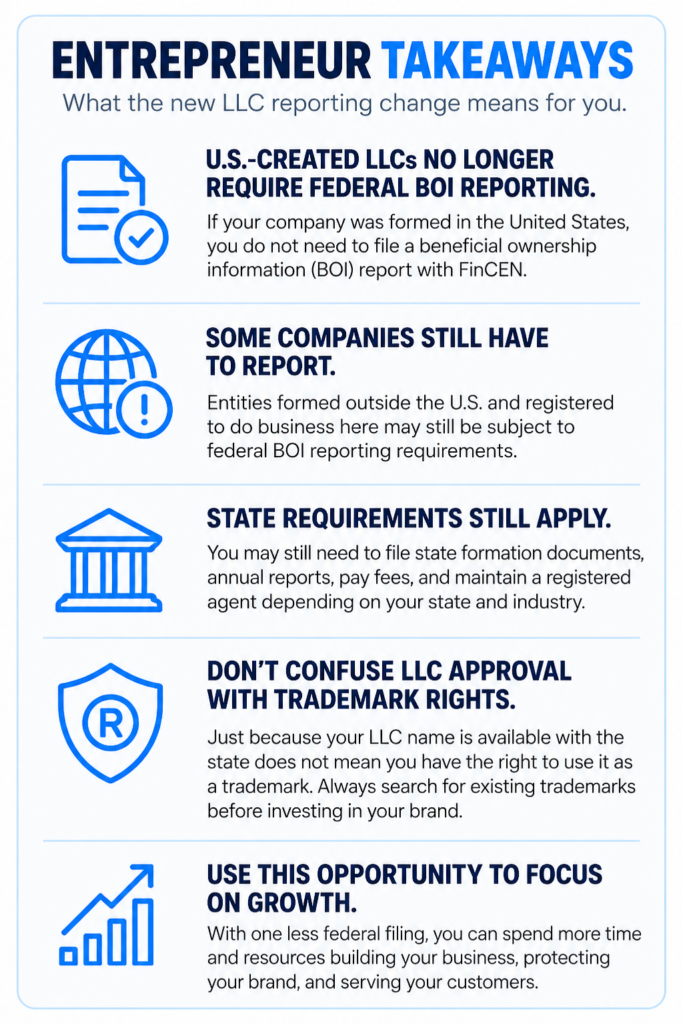
1. U.S.-created companies are exempt.
|
Confirm where your company was formed. Domestic LLCs and corporations no longer need federal BOI reports.
|
|
2. Some foreign companies must still report.
|
Companies formed abroad and registered to do business in the U.S. should check whether reporting requirements apply.
|
|
3. State requirements haven’t disappeared.
|
Review annual reports, registered-agent obligations, licenses, and fees applicable to your business.
|
|
4. LLC approval isn’t trademark protection.
|
Search for conflicting trademarks before investing heavily in your business name, signs, packaging, or advertising.
|
|
5. Beware of misleading filing requests.
|
Verify unexpected BOI filing notices or payment demands against official FinCEN guidance.
|
Less Paperwork. More Room to Build.
Regulatory relief is welcome. It can give entrepreneurs more time to serve customers, hire people, and build something lasting.
But the smartest founders don’t simply celebrate the removal of a requirement.
They use the moment to review the obligations that remain—and the risks worth addressing early.
The goal isn’t to file more forms. It’s to build a business that lasts.
If you’re forming an LLC or choosing a business name,
The Trademark Company can help you understand your formation and trademark options so you can move forward with confidence.
Less bureaucracy creates opportunity. What you build with that opportunity is what really matters.